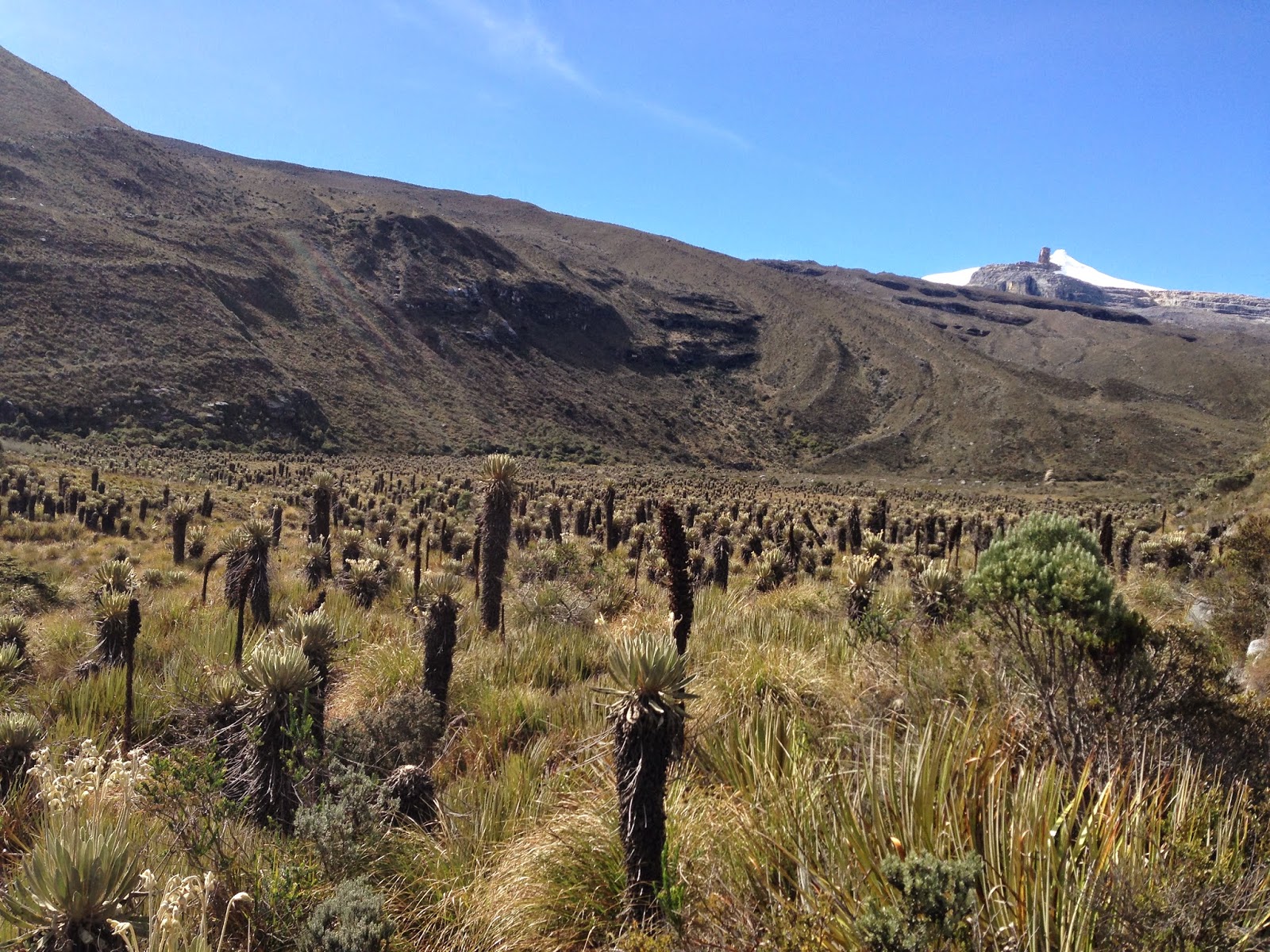
Back in Colorado there's a feeling I get whenever the pavement ends and you can hear the crunch of gravel underneath the tires. This sound and the bump as you dip off the asphalt almost always means you're headed somewhere fun. I can remember this feeling from early in my childhood headed out on family camping trips, and it surfaces now when we head out for weekend hiking/biking/camping/fishing trips. It's a gentle reminder that we're headed to a less traveled, more pristine place and good times with good people are ahead; it almost always makes me crack a smile. With mountain spires in the distance as we bump on the dirt road headed from Esquel, Argentina towards Futelefu back in Chile I can tell by the big smiles on both of our faces that we both have this feeling now. We're headed towards the much anticipated Carretera Austral, the only stretch of road that connects Southern Patagonia in Chile, and the landscape before us is a guarantee that we're headed somewhere spectacular.

 |
| 4th Gear Fix |
The border crossing is almost enjoyable and we quickly realize that there was no need to pull over at the gas station 30 miles back and cook all our meat. The inspection at the little office in the trees is quick and painless and were on our way in no time. Not like the last two times we entered Chile where we had to do things like remove the surfboards and send them through the x-ray machine or surrender my (extremely hard to find) crushed red pepper flakes. One of the agents is so nice he even gives us a key chain and welcomes us. Thanks, Chile- we're glad to be back!
As the dirt road winds past small cabins, farmland and greenhouse we see many people collecting and chopping firewood; a reminder of how rough the winters here must be. Tucked away greenhouses and small handmade wooden signs on the road advertising
verduras for sale ease my concerns that we would have trouble finding provisions as the summer season here winds to an end. We must stop about every 20 minutes to take pictures of dramatic mountains, glaciers and the most colorful rivers.
That night we are rocked to sleep by the beautiful rushing turquoise river river we are parked just a stones throw away from. The crisp pink sunrise reveals more glacier covered peaks and granite walls around us - for a moment we wonder if the truck that flew around the washboard corner at terrifying speeds the night before killed us and we have someway made our way to heaven. George catches fish by the handfuls and I do yoga. Once the sun reaches us, we both shower in the cold river water and then warm in the sunlight.


From there we head to Parque Pumalin, part of Doug Tompkins Conservacion Patagonica project. It's a mix of Disneyland surrealness and wildly beautiful landscape. We camp at the El Volcan campground and have a stunning view of a glacier and live steaming volcano. The next morning we hike up to the Chaiten Volcano and come face to face with the smoldering core. This volcano erupted in 2008 and obliterated the surrounding area. The forest we hiked through to the summit burned only by heat- not flames. Seeing the area making a comeback was a reminder of mother natures tenacity.


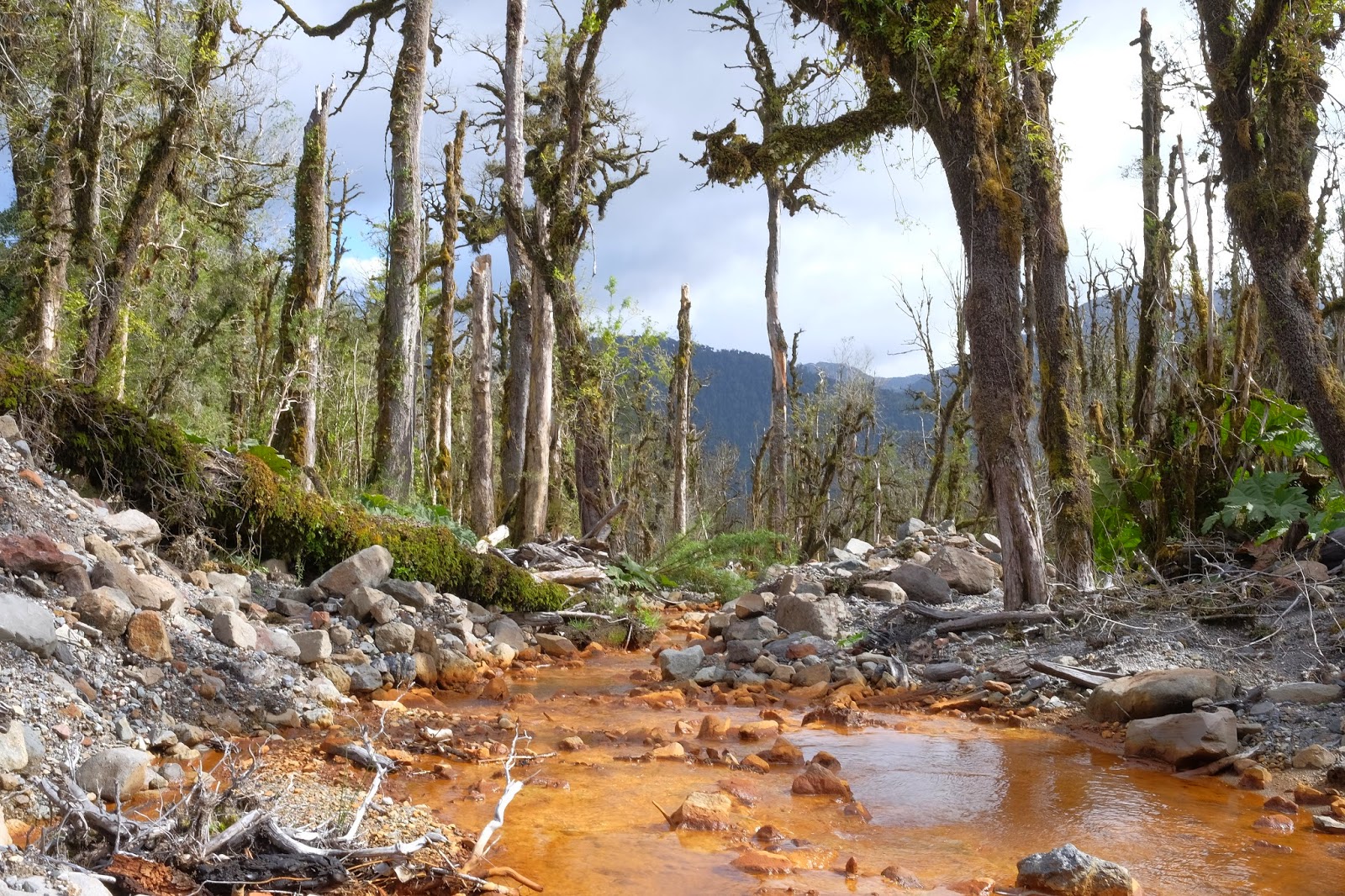
From there we made our way to the northern most part of the Carretera Austal that we can drive, Caleta Gonzalo. The road there is hugged with ferns and every once in a while we get a peek at the surrounding landscape. A thousand shades of green complimented by a thousand shades of blue. Vibrant hillsides, ferns, airplants and ancient trees, contrasted by crystal clear rivers, waterfalls, granite walls and creeping glaciers.

When we arrive at Caleta Gonzalo, where we had hoped to get a map, some more information about the park, enjoy a meal at the cafe, and purchase a few extra vegetables, we find everything closed. After walking around and getting a feel for the place a ferry pulls in, the cafe opens and it starts to rain all at once. We have lunch and ask about the information center opening or the garden house that sells veggies. After we learn that the lady that runs both of these programs is not around and no one else can help us we head to our campground for the night. It rains through the night and in the morning the sun comes out to see us off.
We stopped in Chaiten for lunch and head the the hot springs for an afternoon soak. We make our way to Parque Nacional Queulat where we hike to the hanging glacier and are impressed by the jet engine noise it can make without appearing to move at all. As we get back to the van, the rain starts and doesn't stop for the next day. The rivers swell to a state that's hard to imagine and again were reminded of the grand scale of this place.
 |
| BEFORE: Evening the rain starts |
 |
| AFTER: River the next morning |


After Puerto Rio Tranquilo we make our way to Rio Baker another giant stunning turquoise river. We find a spot that offers great river access, a view of the mountain and protection from the road. While George is fishing and I'm getting the fire ready to grill our pork chops, an adventure mobile stops and a woman gets out and asks, "would it be incredibly cheeky for us to ask to share this spot with you? We have been driving all day and were exhausted. The other spot we checked on iOverlander is also full." Understanding the exhausted feeling, I tell them they are more then welcome and it seems like their rig would fit in a flat spot nicely above us where it appears there is another spot anyways. However, I immediately regret not telling them that there are a few more spots up the road when they manage to wedge themselves in between us and the river, blocking both our mountain view and path to the river. We try to bright side it by thinking it is always nice to have fellow travelers around and swap stories, info, etc. Again we're disappointed when they go inside their giant unimog and skip enjoying the fire, river or the view.

When we arrive it's clear that Parque Patagonia is still getting all of its infrastructure in place. Construction is abound on both roads and buildings all while
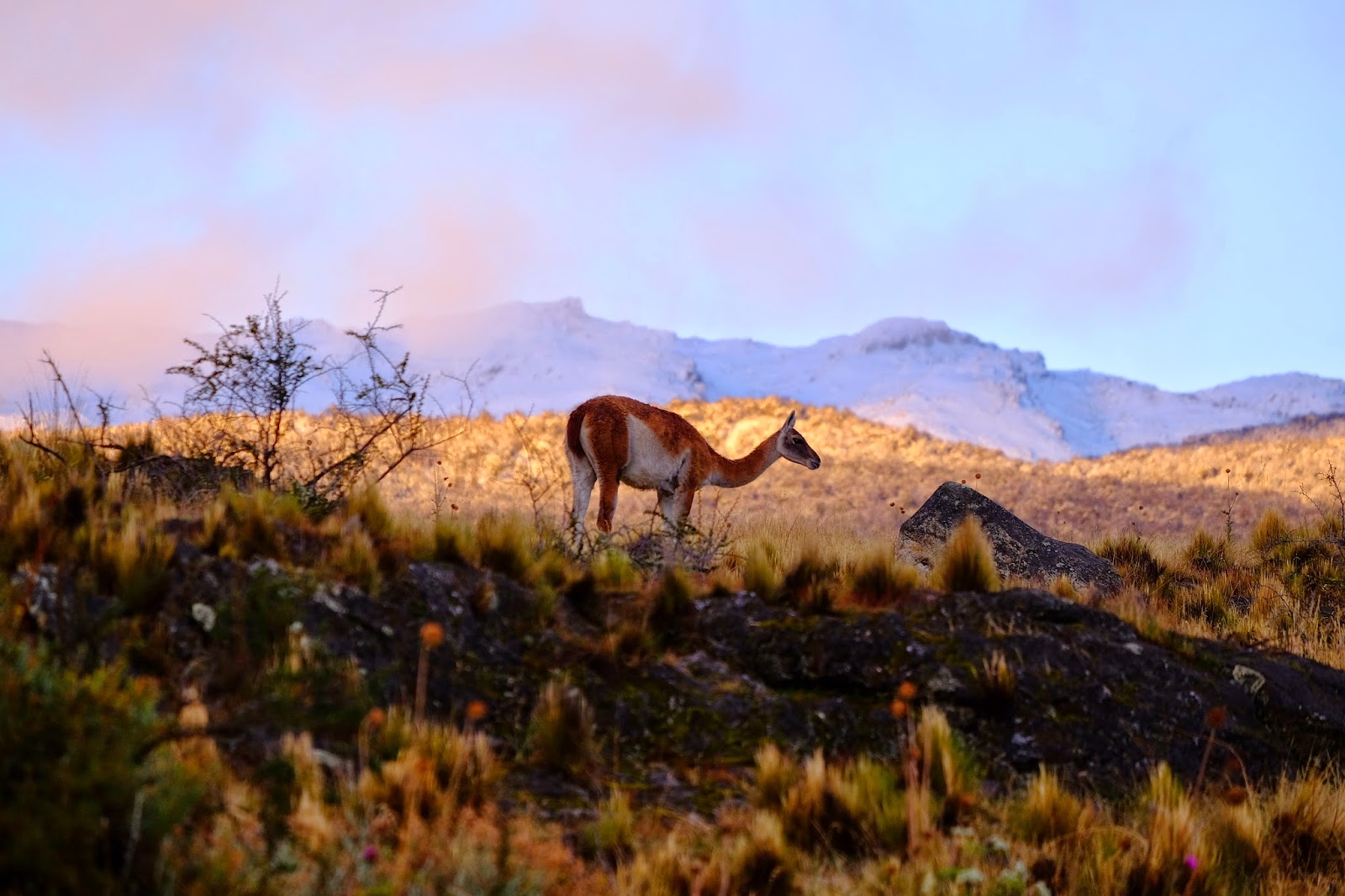
guanacos mill about. That night in the campground I catch a view of a Puma in my headlamp, out of fear and to confirm I'm not crazy, I run back to the van and George sees him from a distance. We had the opportunity to help out in the garden for a bit and meet some of the other people that are involved in the project. It was inspiring to see the progress of this massive undertaking by Doug and Kris Tompkins and I was jealous of the people that were making their mark and preserving these stunning landscapes.




Although parts of the Carretera Austal are now paved and there are plans to pave the whole thing, it still offered that same pristine escape that we were seeking. With signs of fall showing all around us we turn east towards Argentina and five giant condors see us off. This time as we bump off the dirt road on to paved Ruta 40, we have the same smiles, we're headed to El Calafate to pick up our good friend Alex. With Parque Nacional Los Glaciares and Parque Nacional Torres Del Paine ahead we are again headed for good times with good people.